
Every project starts with a real problem. Here's how we solved two of them with document AI — a legal research platform for trade law, and an AI claim rejection analyzer for health insurance — and how each one works today.
Legal teams handling anti-dumping investigations, CVD cases, and trade remedy proceedings before the DGTR (Directorate General of Trade Remedies) had to manually search through hundreds of Trade Notices, DGTR guidelines, WTO agreements, and historical case findings — scattered across emails, shared folders, and government portals.
Researching a precedent for an ongoing investigation could take an associate a full day. Tracking multiple live case deadlines simultaneously was error-prone. There was no central intelligence layer to query across all documents at once.
We designed and built mylegalware.com — a comprehensive RAG-powered (Retrieval Augmented Generation) AI legal intelligence platform purpose-built for DGTR trade practitioners. Every document collection is queryable via an "Ask anything" AI interface with full document context loaded.
Legal documents indexed — Trade Notices, DGTR guidelines, Anti-Dumping findings & DGFT notifications
Law Library, Findings Database, AI Workbench & DGFT Tracker — all RAG-powered
To research a precedent — down from a full day of manual document search
Deployed and actively used by trade law practitioners at mylegalware.com
Having all our Trade Notices, DGTR guidelines, and 100+ case findings in one place — queryable by AI — has fundamentally changed how fast we can build arguments and cross-reference precedents. What took a full day now takes a few minutes.Trade Law Practitioner — mylegalware.com
See a full feature breakdown on our Products page, visit MyLegalWare directly, or read our guide to AI for legal and compliance work.
When a health insurance claim is rejected in India, the policyholder usually receives a short letter that cites a clause, an exclusion or a waiting period in insurance language. Whether that rejection holds up depends on the exact wording of their own policy and on IRDAI rules — two things most people have never read.
Even when they decide to challenge it, they have to work out which documents are missing and which letter to send at each stage: a reconsideration request, a formal appeal, a grievance to the insurer's Grievance Redressal Officer, or a complaint to the Insurance Ombudsman.
We designed, built and operate claimresolveai.com, presented to users as ClaimBhai AI. A policyholder uploads their rejection letter, and the AI extracts the stated reason, explains it in plain language, and maps it to the relevant IRDAI regulations. The product is free for Indian policyholders.
Six tools follow the journey from a rejection to a resolution:
Text is extracted from each uploaded PDF using OCR, including scanned and image-based letters. A retrieval step then pulls matching passages from an indexed library of IRDAI master circulars and regulations, and a large language model produces a structured report from the rejection letter, the policy text and that regulatory context.
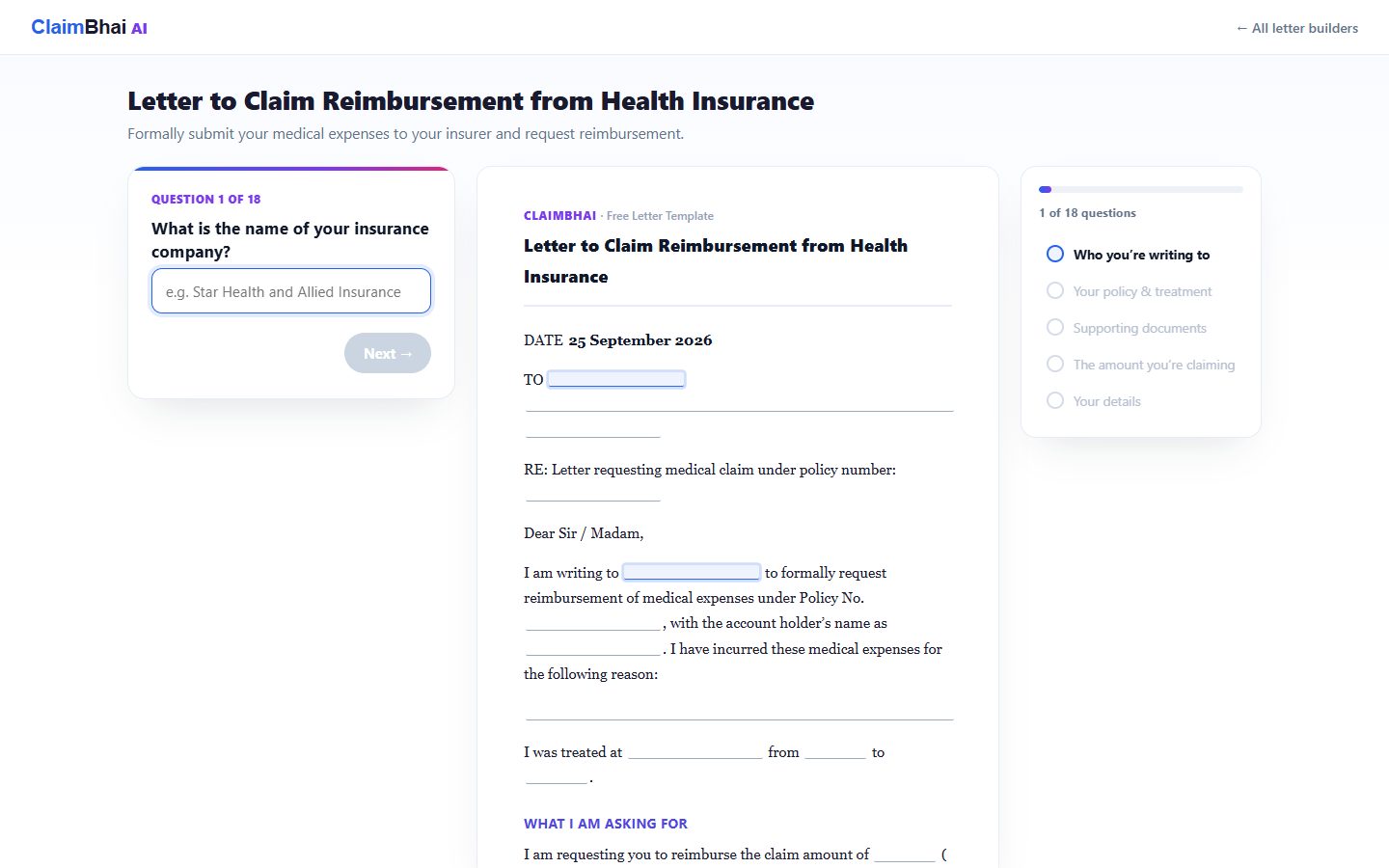
For users who only need a letter, a free Guided Letter Builder needs no sign-up: it asks plain-English questions one at a time and fills the letter in live.
ClaimResolveAI states clearly that it provides guidance, not legal advice.
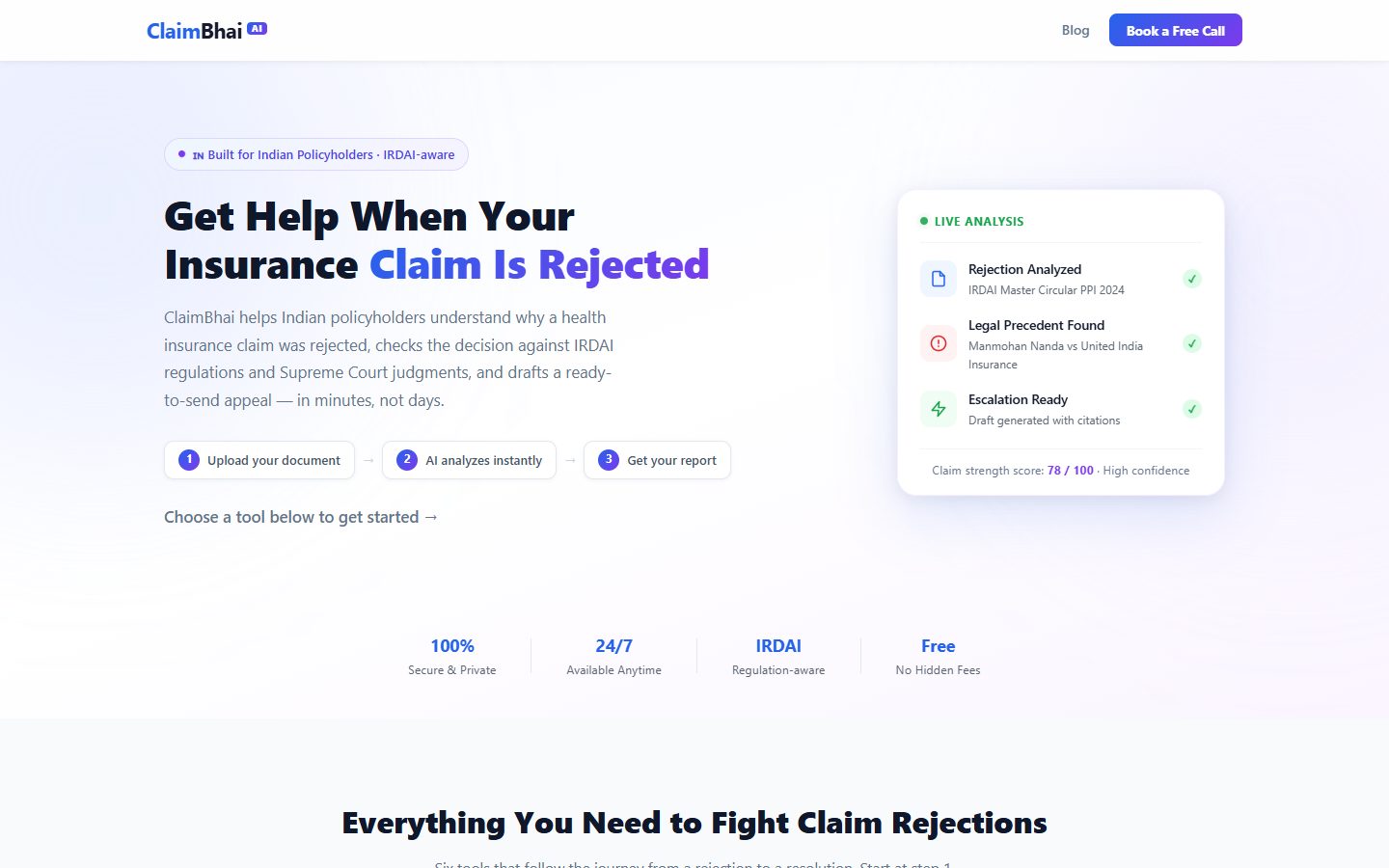
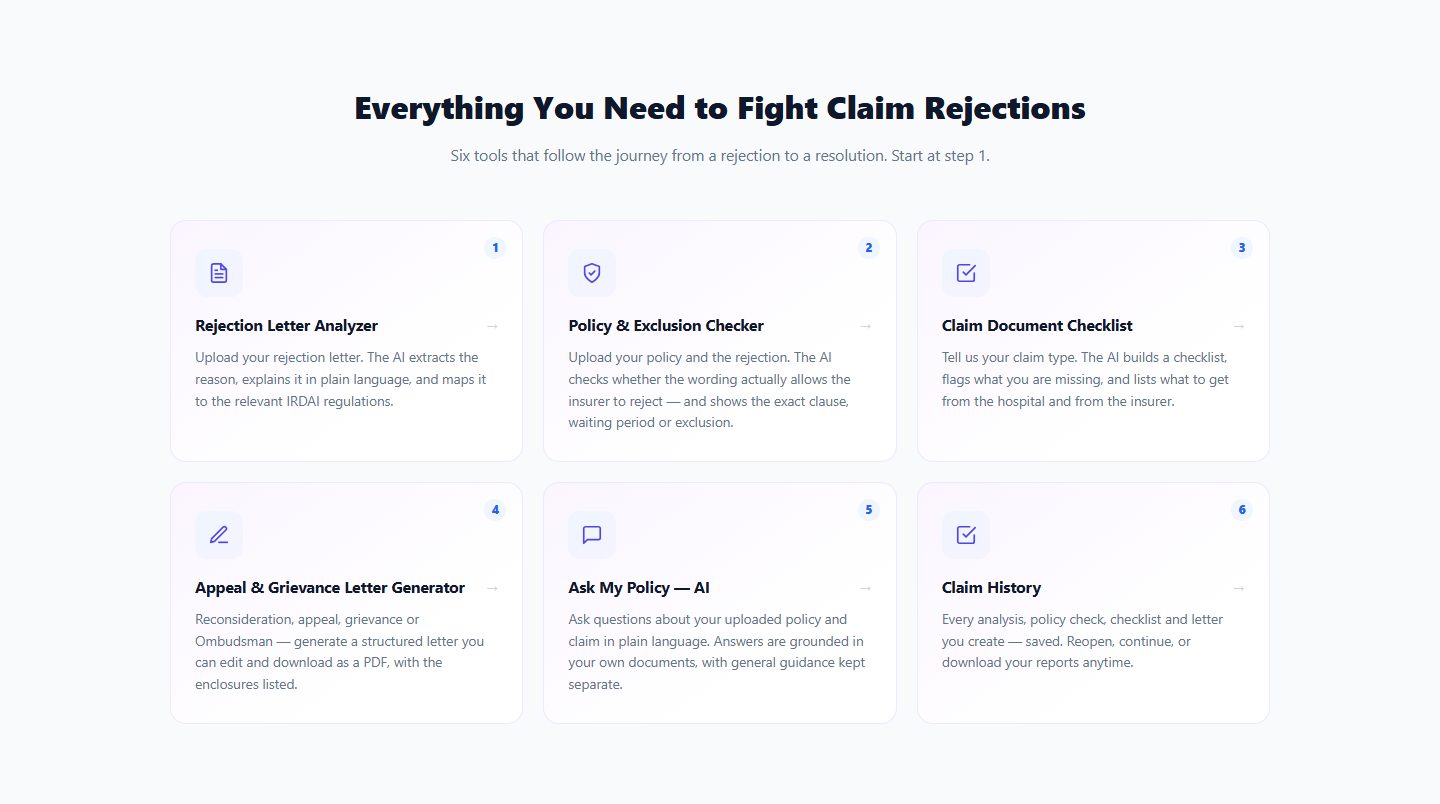
Analyzer, Policy Checker, Document Checklist, Letter Generator, Ask My Policy & Claim History
Guided letter templates in the free Letter Builder, plus 6 downloadable PDF templates
For Indian policyholders — the Letter Builder needs no sign-up
Built and operated by IP Innominds at claimresolveai.com
Try the ClaimResolveAI health insurance claim rejection analyzer at claimresolveai.com, see it alongside our other platforms on the Products page, or read the engineering lessons from building it.
Every implementation starts with a conversation. Tell us your problem and we'll show you exactly how a custom document AI or chatbot would work for your team.
Book a Free Consultation ►